Porset and Van Beuren
The Mexican furniture the world recognized before we did
Q2 2026
April 10, 2026
A competition in New York
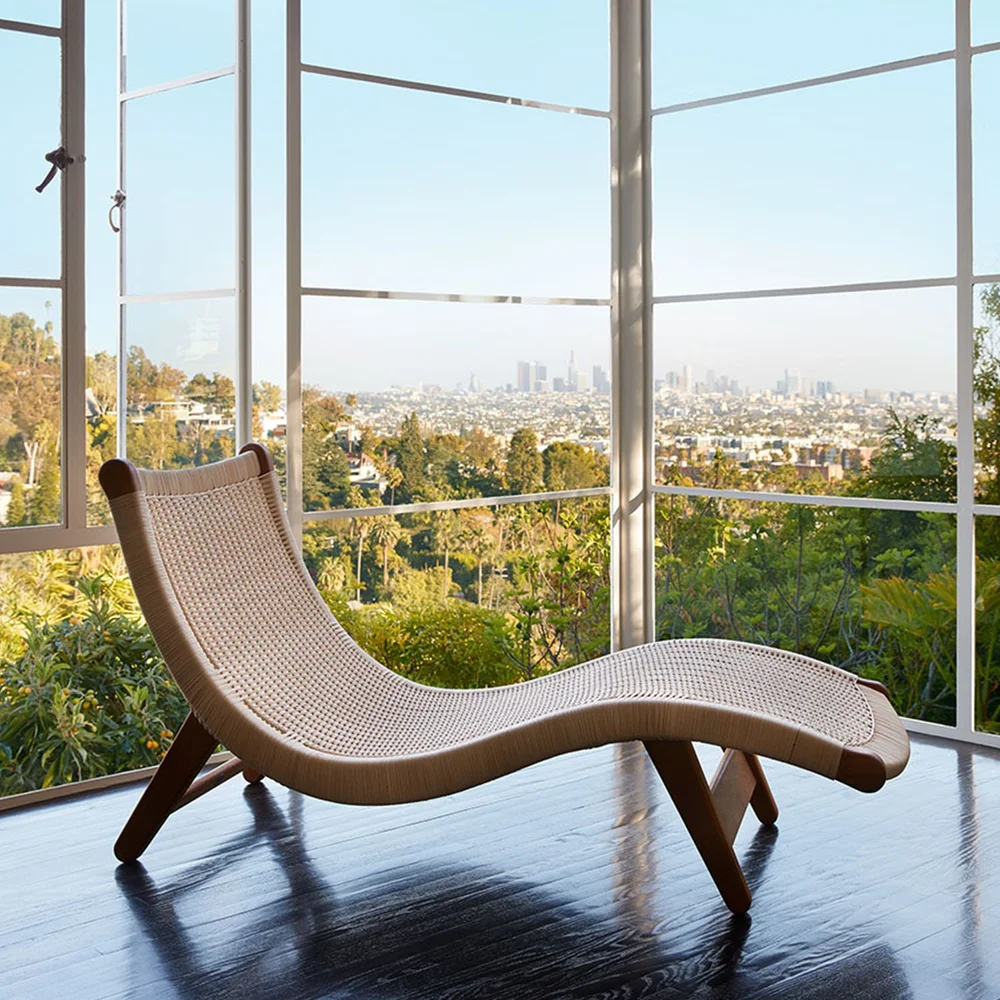
The Museum of Modern Art in New York held the Organic Design in Home Furnishings competition, whose results were exhibited in 1941. Among the winners were two designers working from Mexico: Clara Porset, together with Xavier Guerrero, for a rural furniture project, and Michael van Beuren, Bauhaus-trained and based in the country since 1937, with the Alacrán armchair.
The recognition preceded local interest by decades. Van Beuren founded the Domus workshop, later Muebles Van Beuren, the first factory in the country to mass-produce modern design furniture; at its peak it exceeded a thousand chairs a week. The family kept the company until the early 1970s.
Art in daily life
In 1952, Clara Porset organized the exhibition El arte en la vida diaria at the Palacio de Bellas Artes, the first design exhibition in Mexico. Her thesis was deliberate: to place the industrial object, the designer object and the artisanal object on the same plane, under the idea that only from the relationship between the three could a truly modern design emerge.
Porset also designed the furniture for the Centro Urbano Presidente Alemán, the housing complex led by Mario Pani that defined modern housing in the capital. Her archive is held today at the Centro de Investigaciones de Diseño Industrial in the Facultad de Arquitectura at UNAM.
Why it matters in a transaction
A significant portion of the designer furniture produced in Mexico between 1940 and 1970 remains in private homes without being identified. Pieces by van Beuren, Porset, Antonio Attolini Lack or Don Shoemaker have been sold for decades as used furniture in transactions where the property was delivered furnished.
Three considerations for the owner:
Designer furniture is not part of the property. Absent an express agreement, it does not transfer with the sale. It is worth inventorying it and deciding its fate before negotiating, not during.
Provenance is documented or it does not exist. A period photograph, an original invoice or correspondence with the workshop turns a chair into an attributable piece. Without that, the market treats it as a reproduction.
Poor restoration destroys more value than wear. Reupholstering with materials foreign to the original, or varnishing over treated wood, permanently reduces a piece's value. Patina is not a defect.
The reading for today
The institutions have already done the validation work: the Museo Franz Mayer dedicated monographic exhibitions to both Porset and van Beuren, and MoMA returned to the subject with a review of mid-century Latin American design. What remains is for that recognition to reach the houses where the pieces still are.
Sources
The Museum of Modern Art, New York, Organic Design in Home Furnishings, 1941.
Museo Franz Mayer, Inventando un México moderno. El diseño de Clara Porset (2006) and Huellas de la Bauhaus: Van Beuren (2010).
Centro de Investigaciones de Diseño Industrial, Facultad de Arquitectura, UNAM, Archivo Clara Porset.
Museo Universitario Arte Contemporáneo (MUAC), Una modernidad hecha a mano.
The Museum of Modern Art, Crafting Modernity: Design in Latin America, 1940–1980.

Archivo Rocca
Architecture and Design
Next Article


